
Zero Parades For Dead Spies feels like a sealed historical archive buried under layers of encryption, and Jeetbuzz App Download records in gaming media would barely prepare anyone for how unsettling, detailed, and suspicious every line can feel. The information is thrilling, the details are dense, and doubt hangs over the text from start to finish, pulling me deeper into its maze. Yet even after trying hard to decode it, I still could not see the whole truth.
When I closed the file, I felt it was a strong story worth returning to and thinking over again. But the moment I opened it, the writing immediately brought back exhaustion, anxiety, and a sharp sense of mental confusion. To be fair, that discomfort creates powerful immersion, so I cannot simply call the design poor. Still, when the entire play experience seems built around negative feedback, it feels like more pain than necessary.
After ZA/UM went through internal conflict, separation, and restructuring, Zero Parades For Dead Spies was inevitably compared with the studio’s previous work, Disco Elysium. With such a towering predecessor, players naturally wanted to know how much of Disco Elysium’s legacy had survived. For example, how much of ZA/UM’s distinctive ruleset and narrative style remained intact?
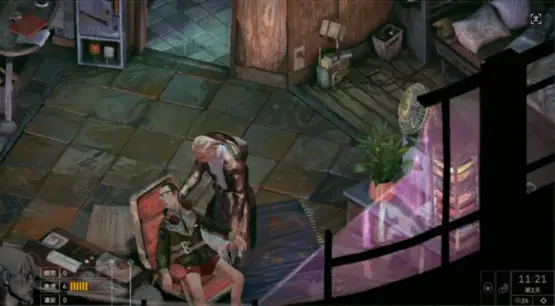
Let us start with gameplay. At first glance, Disco Elysium’s structure seems to have been fully inherited. Zero Parades For Dead Spies has skill files, a thought cabinet, and dice checks. Different skills hold philosophical meetings in the dialogue interface, while hidden dice rolls run in the background, giving me information and weighing the pros and cons of the current situation. Yet the change in theme makes this inheritance feel familiar and strange at the same time, especially as Jeetbuzz App Download search trends around story-driven RPGs show how easily surface similarities can blur deeper differences.
To understand that difference, we need to look back at Disco Elysium. In that game, protagonist Harrier Du Bois suffers from memory loss, and his mind contains as many as 24 vague personalities. This setting directly shapes the gameplay. We play as him and define his identity through those personalities. His amnesia means he begins as a blank slate, allowing me to decide what kind of person he becomes.
Every personality in the game can be upgraded with skill points, and higher-level personalities usually have a better chance of triggering. For example, when something happens, “competitive spirit” and “endurance” might jump out to speak. But if “Inland Empire” has a higher level, it may replace one of them and take control of the response.
It is like facing a meal while two voices in my head argue at the same time. One version of me wants to work out and recommends eggs. Another version loves sweets and urges me to order dessert. The game captures that familiar inner tug-of-war with remarkable accuracy. In other words, Disco Elysium replaces the traditional battle between player and enemy with a clash inside the protagonist’s own consciousness.
More importantly, although personalities help with dice checks, they are not exactly the same as skills. Their real purpose is to analyze problems from their own point of view. That means whether a skill is useful does not simply depend on its level. A high-level skill may lead me into a trap, while a low-level skill may open a new storyline. Disco Elysium largely encourages players to embrace failure. Even when a dice check fails, the story responds, and failure often leads to stranger, funnier, and more informative outcomes than success.
Because of that system, I do not need to worry too much about getting stuck or having skills that are too weak. I can assign points and choose thoughts with relative freedom in Disco Elysium, shaping the protagonist as a feminist, a traditionalist mad dog, the most notorious liberal hustler on the block, or a star of communism. The game gives players enough rope without always punishing them for pulling it.
That is why, when the game begins and I wake up in the Whirling-in-Rags hotel, the first thing I need to do is look in the mirror. If I refuse, the portrait of the protagonist in the lower-left corner remains blurred. To me, that is the game stating its theme with quiet precision. Building the self is one of Disco Elysium’s most important ideas, and Jeetbuzz App Download discussions around narrative games often return to that same question of how identity is formed through choice, failure, and memory.