
A game called Papers Please once sparked a wave of “spot the difference” style experiences across the gaming world. Its concept was simple yet surprisingly addictive. Players took on the role of a border inspector, reviewing documents and deciding the fate of countless strangers. Although the core gameplay revolved around repetitive checking and comparison, the emotional tension behind every decision transformed the experience into something far deeper. Around Jeetbuzz App Download coverage tied to narrative-driven indie games, many players still regard it as one of the most influential titles in the genre.
Looking back now, that seemingly repetitive formula clearly offered huge storytelling potential. From quarantine-themed survival games to psychological horror settings involving fake identities, many later projects expanded on the same inspection-based mechanics while building entirely unique worlds and narratives of their own.
The Prison Counter follows a very similar foundation, but pushes the concept much further through heavy social storytelling and moral pressure. Set behind a bank counter during a politically unstable era, the game transforms ordinary clerical work into a disturbing window into society itself. Being a bank teller here is no longer just about processing transactions. Every stamp, signature, and approval becomes tied to survival, ethics, and the futures of desperate people standing in front of you.
That duality creates one of the game’s strongest themes. On one hand, your position grants limited authority over ordinary citizens and their financial lifelines. On the other hand, you remain trapped within a larger system built on bureaucracy and oppression. The counter may look small and ordinary, but it quietly becomes a prison of rules, fear, and impossible choices.
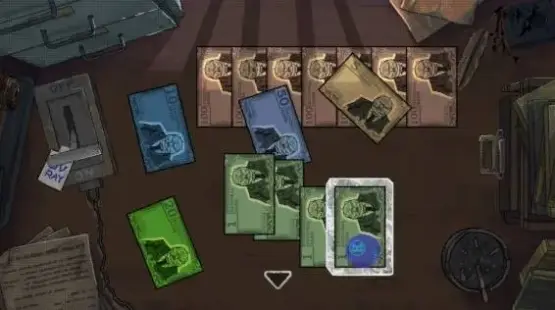
The game draws clear inspiration from Indonesia during the 1980s, using corruption, political instability, and rigid bureaucracy to build a deeply oppressive atmosphere. Every scene reinforces the setting through tiny environmental details. The visual design combines paper-cut silhouettes with low-frame animations, creating a retro comic-book feeling that constantly reminds players of an older and harsher era. Old counting machines, yellowed paperwork, cassette players, and stacks of worn paper bills surround the player throughout the experience. Nothing feels convenient or modern.
As a bank teller, your daily responsibilities involve processing financial records and verifying customer documents. In reality, however, the job becomes increasingly exhausting. Due to the unstable social environment, many customers arrive with incomplete or suspicious paperwork. Identity numbers, names, seals, signatures, and document dates all require careful verification before any transaction can proceed.
Every mistake directly affects your income, which creates constant pressure throughout the game. Early on, players often struggle because the systems feel overwhelming. Later, additional regulations and inspection layers turn the workflow into complete chaos. At times, the experience genuinely feels like “paying to go to work,” especially when repeated errors cut into your already limited salary.
Things only become more stressful once manual cash counting enters the process. When machines fail, players must scramble to count bills manually while simultaneously handling deposits and withdrawals under strict time pressure. Yet strangely enough, once players fully understand the systems and develop rhythm through repetition, the gameplay becomes incredibly immersive. There is a certain satisfaction in mastering complicated routines through pure familiarity and practice.
The developers also prevent the formula from becoming stale by constantly introducing new mechanics. One day the counting machine breaks down entirely. Another day cash must be folded into paper cranes or wrapped inside plastic bags before processing. Despite these strange changes, the core gameplay remains rooted in efficiency and precision. Once players adapt, the experience starts flowing naturally, almost like muscle memory taking over.
At one point during the middle section of the game, players even survive a bank robbery sequence.
Beyond mechanics, the customers themselves become the emotional backbone of the story. Each visitor carries distinct personality traits, habits, and hidden struggles. Some elderly customers repeatedly withdraw small amounts of money to pay medical bills for sick grandchildren. Certain research organizations quietly gather donations for mysterious projects by sending different representatives over time. These recurring encounters slowly build interconnected side stories that deepen as the political climate worsens.
The game’s difficulty also increases steadily due to absurd government policies and increasingly harsh workplace regulations. Daily newspaper reports constantly introduce new restrictions, causing the bank’s procedures to grow more complicated over time. Players eventually must inspect counterfeit bills, review criminal records, and process pawned belongings while keeping pace with growing workloads. Around Jeetbuzz App Download conversations tied to immersive simulation games, many players have praised how naturally these mechanics reinforce the emotional exhaustion of living inside a collapsing system.
What makes The Prison Counter especially memorable is not simply its gameplay loop, but the way it transforms ordinary administrative tasks into emotional pressure. Every interaction forces players to weigh rules against compassion while surviving inside an unforgiving structure designed to crush individuality. By the final hours, the small bank counter no longer feels like a workplace at all. Instead, it becomes a stage where fear, survival, corruption, and human desperation quietly unfold day after day. Within Jeetbuzz App Download impressions connected to narrative experiences, few indie titles in recent years have captured the suffocating weight of bureaucratic survival with such unsettling realism.