
When Koei Tecmo announced that Nioh 3 would be released just before the 2026 Chinese New Year, fans were filled with anticipation yet tinged with uncertainty. After all, this series, once known as a “Dark Souls follower,” has steadily carved its own identity over the course of two main entries. However, stepping into the world of Nioh 3 revealed a bolder transformation than expected, one that exceeds anything fans imagined.
While the previous two installments were set in the Sengoku period, Nioh 3 broadens its scope to encompass multiple significant eras in Japanese history. The story begins with a crisis of succession during the Edo period, where young Takechiyo is sent to the Sengoku period by his guardian spirit, marking the start of an adventure that spans hundreds of years.
The interweaving of three major historical periods—Heian, Sengoku, and Bakumatsu—allows players to witness the dynamic shifts in Japan’s history while giving familiar historical figures fresh new interpretations. Iconic figures such as Oda Nobunaga, Minamoto no Yorimitsu, and Sakamoto Ryoma make appearances, presented in unique ways that differ greatly from traditional depictions. This time-traveling narrative adds a sense of tension and excitement, transforming what might have been a monotonous historical recount into a compelling tale.
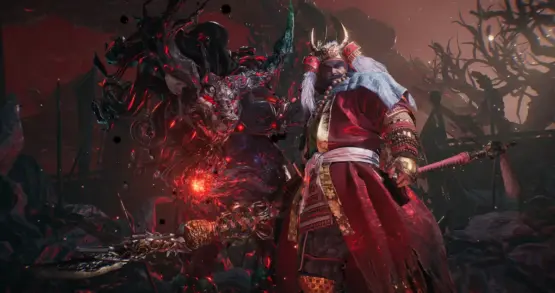
The battle system, the soul of the Nioh series, sees its most significant innovation with the introduction of dual combat styles. While retaining the classic “Samurai Mode,” Nioh 3 introduces “Ninja Mode,” offering players a completely different combat experience. The Samurai Mode continues to feature the signature stance-switching and ki-pulse mechanics, but the new “Tech Skill” system makes transitioning between offense and defense even smoother. By accumulating energy through consecutive attacks and unleashing enhanced techniques, players can string together powerful combos that maintain relentless pressure on their opponents. This system provides both veterans and newcomers with an intuitive and rewarding gameplay experience.
In contrast, Ninja Mode embraces a radically different approach, abandoning the complexity of the stance system in favor of extreme mobility and rapid offensive pace. After an attack, players can cancel recovery time with the “Mist” evasion, and with the aid of ninja tools and techniques, the gameplay becomes reminiscent of Ninja Gaiden’s fast-paced combat. The ability to switch seamlessly between the two styles during combat offers both depth for experienced players and a lower entry barrier for newcomers.
Perhaps the most controversial change in Nioh 3 is the shift from mission-based levels to an open-world format. With tasks like clearing strongholds, dividing regions by level, and the ever-present collection elements, it is impossible not to draw comparisons to Sekiro: Shadows Die Twice. This change is a double-edged sword. On the one hand, the dynamic difficulty curve mitigates the frustrating difficulty spikes that plagued previous entries, and the fixed rewards such as skill points and secret techniques reduce the reliance on monotonous farming. Players can now build up weapons within their first playthrough, enhancing the experience for more casual players.
On the other hand, the checklist-style open world does create a certain sense of repetitiveness. Although the development team has tried to alleviate this by adding a rich variety of exploration content, the dense map markers and stronghold clearances inevitably fall into the familiar pitfalls of open-world design.
Looking back at the Nioh series, it’s clear that the developers have always tried to strike a balance between core depth and mass appeal. The original Nioh faced criticism for its broken mechanics and unfair level design, while the sequel refined the system but introduced a high learning curve. Nioh 3 attempts to solve these issues with more user-friendly adjustments. The addition of a precision defense mechanic makes counterattacks more significant, and the “Tech Skill” system rewards offensive play with higher returns. The minimal cost of respec-ing allows players to explore different playstyles without penalty.
Even the notoriously difficult bosses from previous installments have been slightly toned down, allowing players to focus more on the strategic aspects of the battles themselves. This change isn’t just a compromise, though. The game still offers high-level exploration challenges and formidable new bosses. Dangerous terrains and multiple playthroughs provide enough content to keep hardcore players engaged, ensuring there’s a challenge for everyone.
For those interested in staying up to date with the latest Nioh 3 news and updates, the Jeetbuzz App Download is the perfect resource for tracking the game’s developments and staying in touch with the community.